Dr. Tracy D. Hall Highlights the Power of Partnerships and Exposure in Building Memphis’ Workforce
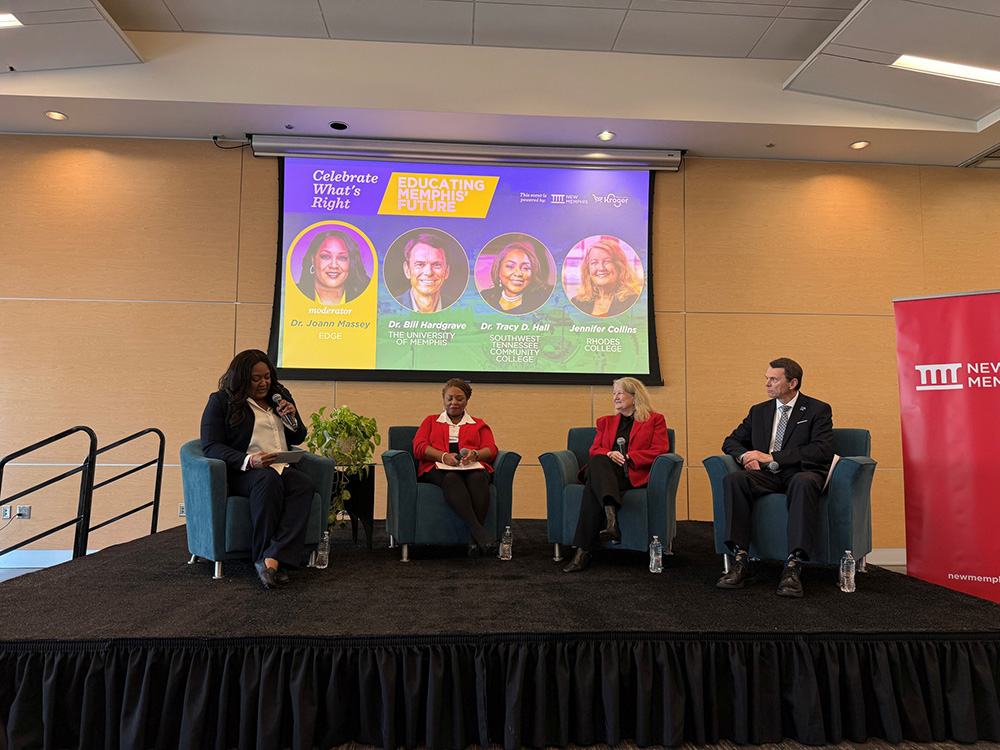
(L-R): New Memphis panel moderator Joann Massey of Edge with college presidents
Tracy D. Hall, Jennifer Collins and Bill Hardgrave.
At the New Memphis forum on Feb. 25, 2026, held at the National Civil Rights Museum, presidents from three of Memphis’ higher education institutions—Dr. Tracy D. Hall from Southwest Tennessee Community College, Jennifer Collins, Esq. from Rhodes College, and Dr. Bill Hardgrave from the University of Memphis—came together to discuss how their campuses are shaping the city’s economic future.
President Hall’s overarching message resonated powerfully: education must meet students where they are, respond to industry needs, and provide real pathways to prosperity. For Hall, the core mission of a community college is woven directly into its name. “We like to say that the community is our middle name,” she said. “Our biggest goal is to make sure students know it’s access and opportunity. That’s what we do. Our job is to make sure the community is successful.”
She emphasized that in today’s rapidly changing economy, the question isn’t whether education is worth it—it’s whether institutions are offering the right education. Southwest, Hall explained, is laser focused on ensuring its programs lead to meaningful careers and real economic mobility.
“We are looking at our programs and really examining the outcomes. Are these programs graduating our students into success, or are they graduating them into poverty?” Hall asked. “We need to be transparent about which career paths are truly sustainable and make sure our students are equipped for jobs that allow them to build their lives and support their families.”
Exposing Students to What’s Possible
A central theme of Hall’s remarks was exposure—opening students’ eyes to careers they
may never have considered or believed were within reach. Southwest’s mobile learning
labs, known as the Southwest Express, travel into neighborhoods across the city, bringing
simulated workforce experiences directly to students. Aviation technology, manufacturing,
and health science simulations allow students—children and adults alike—to picture
themselves in fields they may have never encountered.
“When students can see themselves as pilots, engineers, or technicians—when they can literally step into that world—it helps them imagine a different path,” Hall said.
Responding to Industry with Agility
Hall also highlighted one of Southwest’s strengths: its ability to move quickly in
response to employer needs. Community colleges were built to be nimble, she noted—a
necessity in an era when technology and job requirements shift at unprecedented speed.
Recently, Southwest became the first community college in Tennessee to be approved to offer an associate degree in Artificial Intelligence. This major milestone positions Memphis students at the forefront of emerging technology.
“We don’t want our students left behind in the technology boom,” Hall said. “AI is reshaping every industry, and we want our students at the table—trained, marketable, and ready.”
To stay aligned with workforce needs, every Southwest career program is guided by employer advisory boards that help ensure curriculum, equipment, and skill-building remain current. As Hall explained, employers consistently emphasize foundational skills such as communication, creative and critical thinking, and teamwork. Meeting these expectations is central to Southwest’s mission.
Partnerships with a Shared Commitment to Memphis
As workforce needs grow and shift, Hall said she believes the strength of Memphis’
future depends on the strength of its educational partnerships—and on the belief that
every Memphian deserves opportunity.
“We love Memphis, and we do what we need to do to move Memphis forward,” she said. “Southwest is proud to be part of this dynamic ecosystem, shaping the future of Memphis together.”