Senior Leaders Advance Pathways to Prosperity: Reform 3.0 at Strategic Planning Retreat
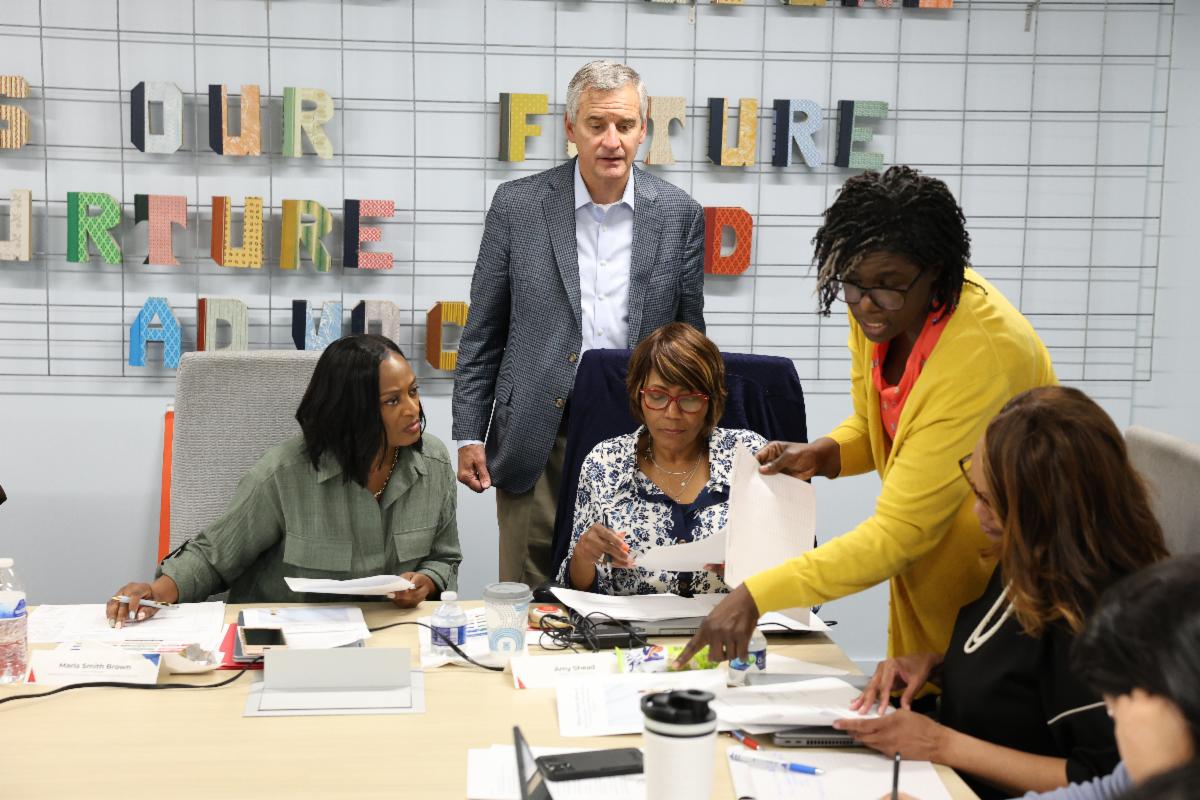
Consultant Dr. Paul Friga of AGB oversees planning discussions about Reform 3.0 by
(l-r) Marla Smith-Brown (Marketing), Amy Shead (Workforce Solutions), Jennifer Townes
(Human Resources), and Tameka Perry (Chief of Staff).
Senior leaders at Southwest gathered April 6 at the Urban Child Institute for a strategic planning retreat focused on implementing the college’s next strategic plan, Pathways to Prosperity: Reform 3.0.
The full‑day session brought together the president, her executive leadership team, interim associate vice presidents within the Student Affairs and Academic Affairs division, the leaders of Workforce Development and the Center for Teaching, Learning and Excellence (CTLE), and the director of strategic planning. The Urban Child Institute provided complimentary use of its facilities.
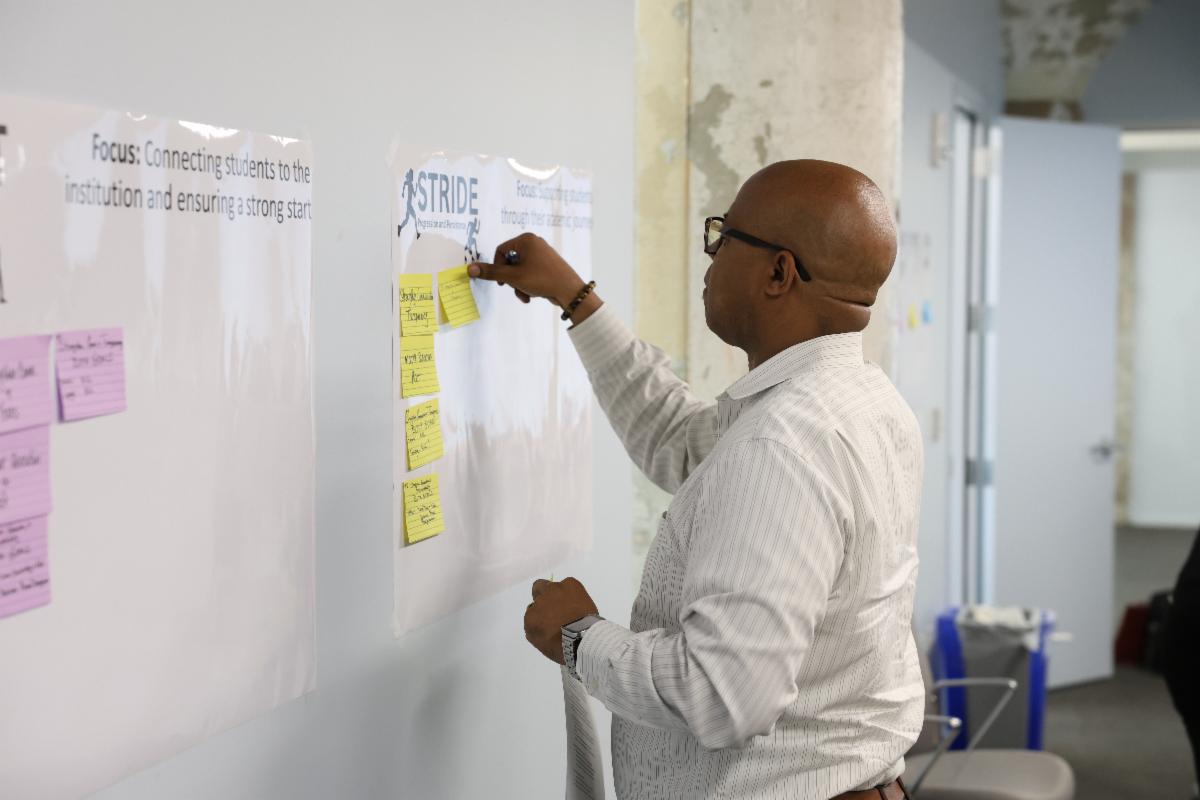
Dr. Michael Boyd posts stickie notes from
brainstorming sessions.
The retreat was guided by strategic planning consultant Dr. Paul Friga of AGB, whose consultation with the college concludes April 30, and culture consultant Dr. Monique Perry Graves. Following Friga’s engagement, Perry Graves will begin her work with the college, ensuring continuity between strategic direction and organizational culture.
Associate Vice President Erica Hughes opened the retreat with a comprehensive closeout of Focus 2025, the college’s previous strategic plan. Her presentation highlighted progress made during the 2020–25 period, including goals that were successfully achieved as well as areas that presented challenges and opportunities for growth.
Building on that reflection, the retreat shifted to Pathways to Prosperity: Reform 3.0, using President Tracy D. Hall’s white paper as the foundational framework for the new plan. Leadership entered what participants described as the “put meat on the bone” phase, moving beyond vision to identify actionable priorities and measurable tactics.
Dr. Friga shared an overview of feedback gathered by his team during recent listening sessions with employees and students across the college. The feedback helped inform discussions about institutional strengths, gaps and opportunities, while reinforcing the importance of aligning strategy with lived campus experiences.
Participants also engaged in a facilitated activity examining core job functions across divisions and analyzing where specific roles are most critical within the student life cycle — defined as Start, Soar and Stride. The exercise allowed leaders to consider how organizational structure and daily operations can better support student success from entry through completion and beyond.
A significant portion of the retreat was dedicated to brainstorming initiatives aligned with the two primary goals of Pathways to Prosperity: Reform 3.0: increasing the number of Southwest Tennessee students who go on to earn bachelor’s degrees and strengthening the college’s Workforce Development department to better meet regional labor needs.
“The retreat provided an opportunity for us to reflect on our 2020–25 strategic plan, Focus 2025, as well as the opportunity to consider tactics for our next strategic plan,” said Tameka Perry, chief of staff. “We were pleased to see that we met several of our Focus 2025 goals, and we plan to successfully address the missed opportunities with other tactics during the Pathways to Prosperity: Reform 3.0 era.”
College leaders said the retreat positioned Southwest to move forward with clarity, collaboration and a renewed focus on long‑term student and workforce outcomes.